

Is a black wall electric fireplace built in environmentally friendly?
Jun 26, 2025
In the modern era, where environmental consciousness is at an all - time high, consumers are increasingly concerned about the ecological impact of the products they purchase. As a supplier of Black Wall Electric Fireplace Built in, I often encounter questions regarding the environmental friendliness of our product. In this blog post, I'll delve into the aspects that make a black wall electric fireplace built - in an eco - friendly choice.
Energy Efficiency
One of the primary factors that contribute to the environmental friendliness of an electric fireplace is its energy efficiency. Unlike traditional wood - burning fireplaces, which waste a significant amount of heat through the chimney, electric fireplaces convert almost all of the electrical energy they consume into heat.
Most Black Wall Electric Fireplace Built in models are equipped with advanced heating elements that are designed to heat up quickly and maintain a consistent temperature. This means that they don't need to run continuously at high power, which in turn reduces overall energy consumption.
For instance, modern electric fireplaces often use infrared heating technology. Infrared heaters emit infrared radiation that directly heats objects and people in the room, rather than heating the air. This targeted heating approach is more efficient because it reduces heat loss and ensures that the energy is used effectively. In comparison, wood - burning fireplaces lose a large portion of heat up the chimney, and the heat they do distribute is often unevenly spread throughout the room.
Reduced Emissions
Another significant advantage of electric fireplaces in terms of environmental friendliness is the lack of harmful emissions. Wood - burning fireplaces release a variety of pollutants into the atmosphere, including particulate matter, carbon monoxide, and volatile organic compounds (VOCs). These pollutants can have serious health implications, especially for people with respiratory conditions such as asthma and chronic obstructive pulmonary disease (COPD).

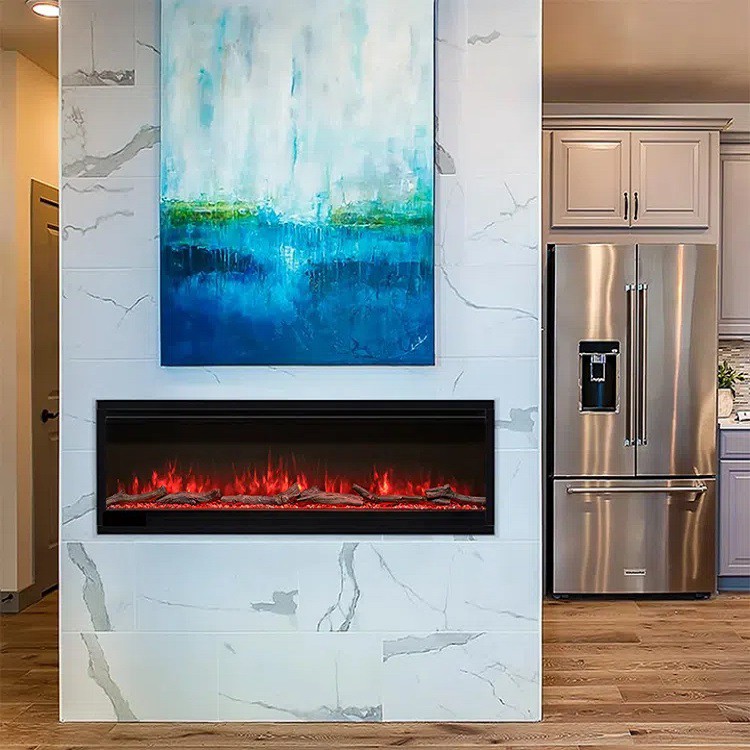
In contrast, Black Wall Electric Fireplace Built in units produce zero emissions at the point of use. They don't burn any fuel, so there is no combustion process that generates pollutants. This makes them a much cleaner option for indoor heating, particularly in urban areas where air quality is already a concern.
Even when considering the source of the electricity used to power the fireplace, the environmental impact can be relatively low. If the electricity is generated from renewable sources such as solar, wind, or hydroelectric power, the overall carbon footprint of the electric fireplace is significantly reduced. As the share of renewable energy in the global energy mix continues to increase, the environmental benefits of electric fireplaces will become even more pronounced.
Durability and Longevity
The durability of a product is also an important aspect of its environmental impact. A long - lasting product reduces the need for frequent replacements, which in turn reduces waste. Black Wall Electric Fireplace Built in units are typically built to last. They are made from high - quality materials that can withstand the rigors of regular use.
The heating elements in electric fireplaces are designed to have a long lifespan, often lasting for many years without needing replacement. Additionally, the outer casing and other components are constructed to be resistant to wear and tear. This means that consumers can enjoy their electric fireplace for a long time, reducing the amount of waste that would be generated if they had to replace a less durable heating device.
No Need for Ventilation
Unlike traditional fireplaces, which require a chimney or venting system to remove smoke and gases, electric fireplaces do not need any ventilation. This not only simplifies the installation process but also has environmental benefits.
The construction of a chimney or venting system requires materials such as bricks, mortar, and metal, which have a significant environmental impact during their production. By eliminating the need for ventilation, electric fireplaces reduce the demand for these materials and the associated energy and resources used in their manufacturing.
Comparison with Other Electric Fireplace Types
When comparing Black Wall Electric Fireplace Built in with other types of electric fireplaces, such as Square Electric Fires or Real Flame Electric Fireplace Insert with Blower, the built - in design offers some unique environmental advantages.
Built - in electric fireplaces are often more integrated into the structure of a room, which can provide better insulation. This helps to reduce heat loss and improve energy efficiency. In contrast, freestanding electric fireplaces may have more gaps around them, allowing heat to escape.
The built - in design also gives a more permanent and solid installation, which can lead to a longer lifespan. Freestanding models may be more prone to being moved around, which can cause damage over time.
Conclusion and Call to Action
In conclusion, a Black Wall Electric Fireplace Built in is an environmentally friendly choice for indoor heating. Its energy efficiency, reduced emissions, durability, and lack of need for ventilation all contribute to a lower environmental impact compared to traditional wood - burning fireplaces and even some other types of electric fireplaces.
If you're looking for an eco - friendly heating solution that combines style and functionality, our Black Wall Electric Fireplace Built in is an excellent option. We are committed to providing high - quality, environmentally friendly products, and we would be more than happy to discuss your specific needs and requirements. Whether you're a homeowner looking to upgrade your living space or a contractor working on a new project, we can offer the right solution for you. Please reach out to us to start a discussion about your potential purchase and explore how our products can meet your heating and environmental goals.
References
- "Energy Efficiency of Electric Heating Systems." International Energy Agency.
- "Health Effects of Wood - Burning Fireplaces." World Health Organization.
- "The Future of Renewable Energy." National Renewable Energy Laboratory.