

Can a 3D Electric Water Vapor Fireplace be used as a primary heating source?
Aug 07, 2025
Can a 3D Electric Water Vapor Fireplace be used as a primary heating source?
In recent years, the 3D Electric Water Vapor Fireplace has gained significant popularity for its realistic flame effects and decorative appeal. As a supplier of 3D Electric Water Vapor Fireplaces, I often receive inquiries from customers wondering if these innovative fireplaces can serve as a primary heating source. In this blog post, we will explore the capabilities of 3D Electric Water Vapor Fireplaces and determine whether they are suitable for primary heating.
Understanding the Technology of 3D Electric Water Vapor Fireplaces
Before delving into their heating capabilities, it's essential to understand how 3D Electric Water Vapor Fireplaces work. These fireplaces use a combination of water vapor and LED lights to create a stunning visual effect that mimics the look of a real wood - burning fire. The water is heated and turned into vapor, which is then illuminated by LED lights to produce a realistic flame - like appearance.
Most 3D Electric Water Vapor Fireplaces also come with a heating element. This heating element is typically an electric resistance heater, similar to those found in traditional electric space heaters. When the heating function is activated, the heater warms the air in the vicinity of the fireplace, providing a source of warmth.
Heating Capacity of 3D Electric Water Vapor Fireplaces
The heating capacity of a 3D Electric Water Vapor Fireplace depends on several factors, including the power rating of the heating element and the size of the room. Most 3D Electric Water Vapor Fireplaces have a power rating ranging from 750 watts to 1500 watts.
A general rule of thumb is that for every 1000 watts of power, an electric heater can effectively heat a room of about 100 - 150 square feet. So, a 1500 - watt 3D Electric Water Vapor Fireplace can potentially heat a moderately sized room of around 150 - 225 square feet. However, this is a rough estimate, and actual heating performance can be affected by factors such as insulation, ceiling height, and the number of windows in the room.
Advantages of Using a 3D Electric Water Vapor Fireplace for Heating
One of the main advantages of using a 3D Electric Water Vapor Fireplace for heating is its energy efficiency. Unlike traditional wood - burning fireplaces, which can lose a significant amount of heat through the chimney, 3D Electric Water Vapor Fireplaces convert almost all of the electrical energy they consume into heat. This means that you get more heat for your money, making them a cost - effective heating option in the long run.
Another advantage is the convenience. These fireplaces are easy to install and operate. You can simply plug them into an electrical outlet and turn them on with the push of a button. There is no need for a chimney, and you don't have to deal with the hassle of chopping wood, cleaning ashes, or dealing with smoke.

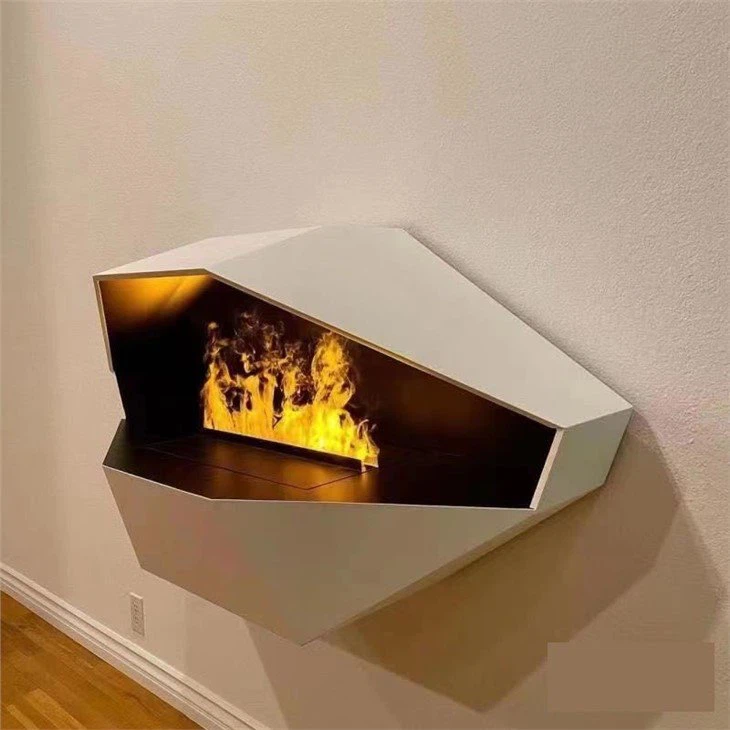
The visual appeal of a 3D Electric Water Vapor Fireplace is also a significant advantage. It can create a warm and inviting atmosphere in your home, enhancing the overall aesthetic of the room. Whether you're looking to relax after a long day at work or entertain guests, the realistic flame effect can add a touch of luxury and comfort to any space.
Limitations of Using a 3D Electric Water Vapor Fireplace as a Primary Heating Source
Despite their many advantages, there are some limitations to using a 3D Electric Water Vapor Fireplace as a primary heating source. One of the main limitations is the heating range. As mentioned earlier, most 3D Electric Water Vapor Fireplaces are only suitable for heating small to moderately sized rooms. If you have a large open - plan living area or a multi - story home, a single 3D Electric Water Vapor Fireplace may not be sufficient to heat the entire space.
Another limitation is the lack of backup in case of a power outage. Since these fireplaces rely on electricity to operate, they will not work if there is a power failure. In areas where power outages are common, it may be necessary to have an alternative heating source, such as a gas heater or a wood - burning stove.
Comparing with Other Heating Sources
When compared to other heating sources, such as central heating systems, 3D Electric Water Vapor Fireplaces have both advantages and disadvantages. Central heating systems are designed to heat an entire building evenly and can maintain a consistent temperature throughout the day. They are also often more powerful than 3D Electric Water Vapor Fireplaces and can heat larger spaces.
However, central heating systems can be expensive to install and maintain. They also require a significant amount of energy to operate, especially if the building is not well - insulated. In contrast, 3D Electric Water Vapor Fireplaces are relatively inexpensive to purchase and install, and they can be used to heat specific areas of the home, which can help save energy.
Conclusion
So, can a 3D Electric Water Vapor Fireplace be used as a primary heating source? The answer depends on your specific needs and circumstances. If you have a small to moderately sized room that is well - insulated, and you're looking for an energy - efficient, convenient, and visually appealing heating option, a 3D Electric Water Vapor Fireplace can be a great choice. However, if you have a large home or live in an area with frequent power outages, it may be necessary to use it as a supplementary heating source or consider other heating options.
As a supplier of 3D Electric Water Vapor Fireplaces, we offer a wide range of models to suit different needs and budgets. Our LED Light 3D Water Steam Vapor Electric Fireplace and 3D LED Water Vapor Electric Fireplace are designed to provide both realistic flame effects and efficient heating.
If you're interested in learning more about our products or would like to discuss your heating needs, we encourage you to contact us for a procurement discussion. We have a team of experts who can help you choose the right 3D Electric Water Vapor Fireplace for your home.
References
- "Heating Capacity of Electric Heaters." Energy.gov.
- "Advantages and Disadvantages of Different Heating Systems." Home Heating Magazine.